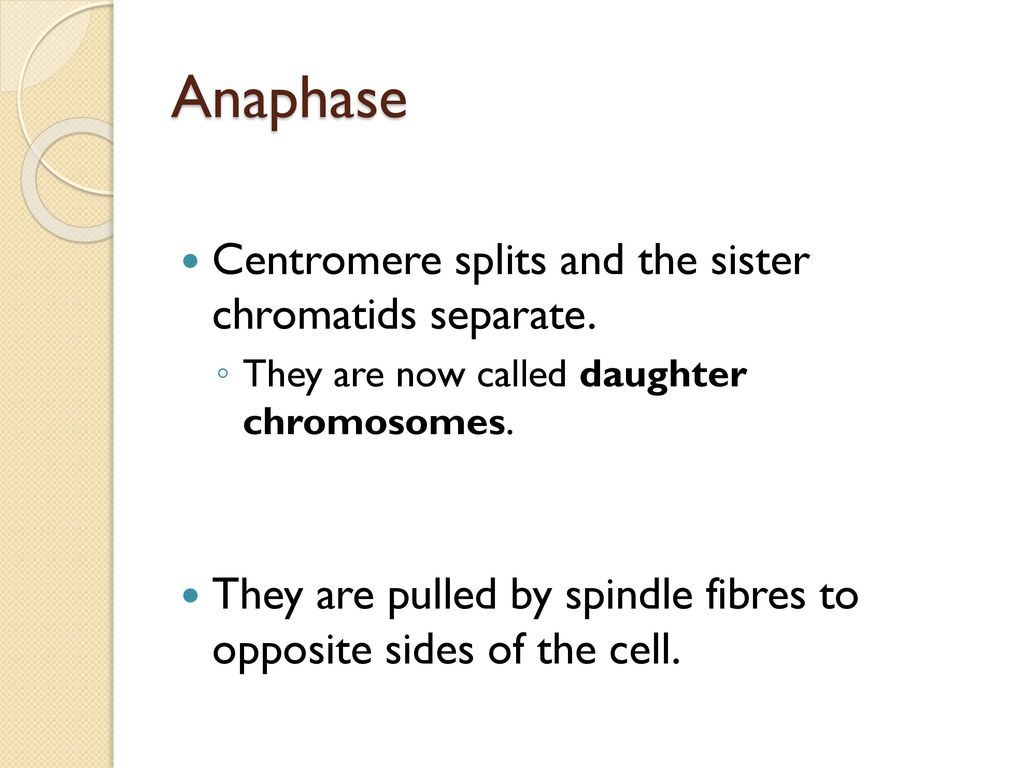
Chromosomes in anaphase left IMAGE Biology Diagrams

Chromosomes in anaphase left IMAGE Biology Diagrams In contrast to Anaphase I, where homologous chromosomes separate, Anaphase II involves sister chromatids held together by cohesin proteins. The anaphase-promoting complex (APC) activates separase, an enzyme that cleaves cohesin, allowing chromatids to move to opposite poles. Spindle fibers exert tension on kinetochores, ensuring accurate Anaphase: Chromatid Separation. Following chromosome alignment in metaphase, anaphase initiates the physical separation of sister chromatids. This stage involves cohesin breakdown, microtubule shortening, and chromatid movement toward opposite poles. Cohesin Cleavage
Chromosome separation is a pivotal process in cell division, ensuring that genetic information is accurately distributed to daughter cells. Anaphase, a critical stage of both mitosis and meiosis, plays an essential role in this mechanism. Anaphase A involves the poleward movement of sister chromatids toward spindle poles, driven by the depolymerization of kinetochore microtubules and the activity of motor proteins, such as dynein and kinesin.Anaphase B is characterized by spindle elongation and separation of spindle poles, mediated by the sliding apart of antiparallel interpolar microtubules and the action of molecular motors Chromosome Separation In Anaphase I, the paired homologous chromosomes undergo separation, ensuring each daughter cell receives a complete set of chromosomes. This separation occurs due to the contraction of microtubules known as spindle fibers. These spindle fibers connect to the kinetochores located at the centromeres of the chromosomes.
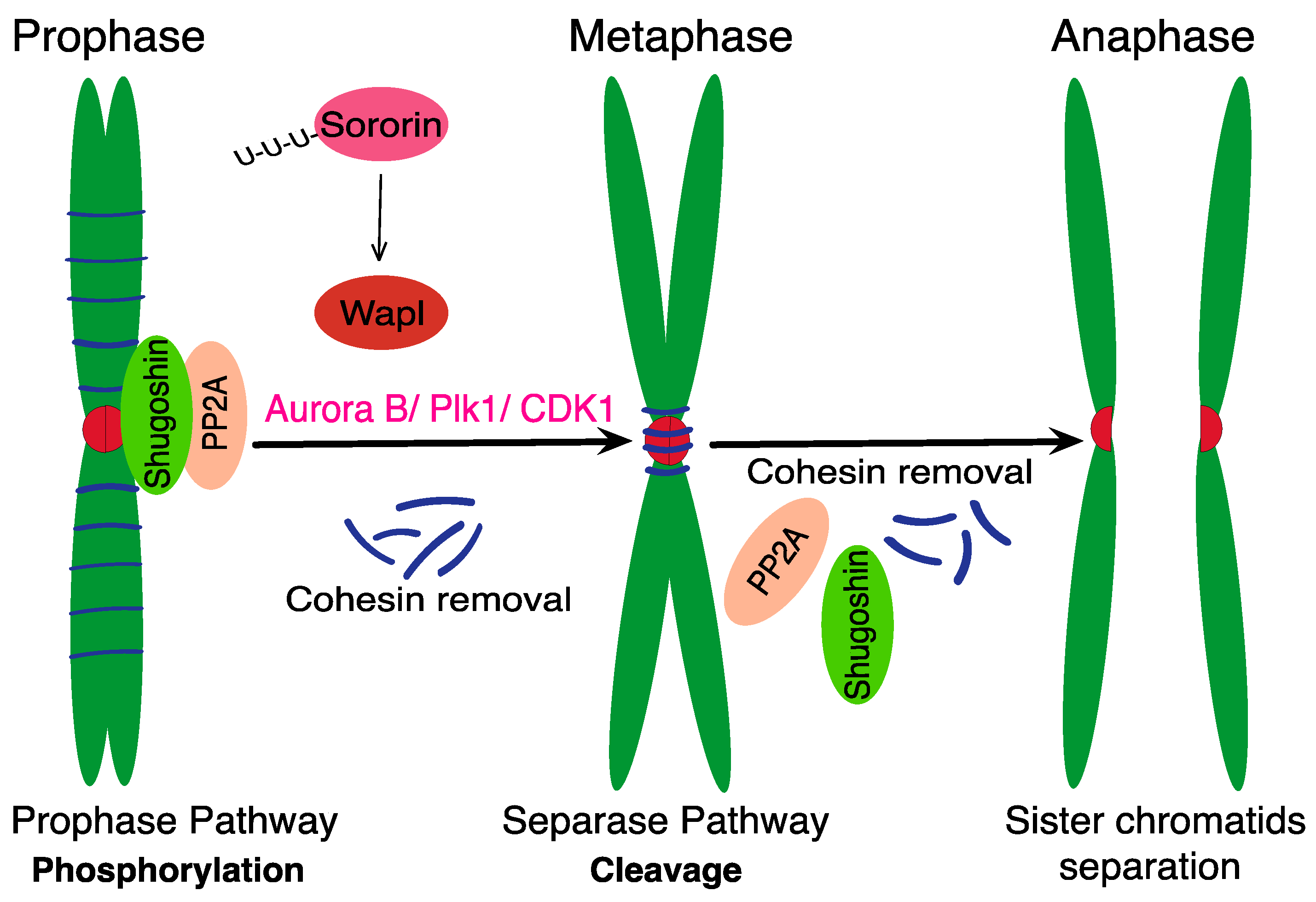
Definition and Stages in Mitosis and Meiosis Biology Diagrams
Separation occurs simultaneously at the centromere and each separated chromosome gets pulled by the spindles to the opposite poles of the cell. The function of anaphase is to ensure that each daughter cell receives identical sets of chromosomes before the final phase of the cell cycle, which is telophase. The separation of chromosomes during Anaphase I is crucial for genetic diversity. It ensures that each gamete receives a unique combination of genes. This process, combined with crossing over in Prophase I and independent assortment, contributes significantly to variation among offspring.

Anaphase Promoting Complex - The system of proteins, coenzymes, and other molecules that enable separase to degrade cohesin molecules, leading to separation of chromosomes. Cohesin - The protein molecules that bind sister chromatids or homologous chromosomes together.